Urumqi computing center
Developing computing facilities for regional digital services, coordinating power and network infrastructure, and connecting applications in Xinjiang and those serving Central Asia.

GREEN INFRASTRUCTURE. CROSS-BORDER INDUSTRY.
Based in Xinjiang, JINGNEXUS (XINJIANG) ENERGY TECHNOLOGY CO., LTD. develops green energy, green computing, cross-border industrial parks and digital border gateways, connecting markets in China and Central Asia. The company coordinates project development, resource integration, investment organization and industrial tenant recruitment, linking industrial energy demand, digital services, cross-border logistics and park infrastructure to advance green infrastructure development and China–Kazakhstan industrial cooperation.
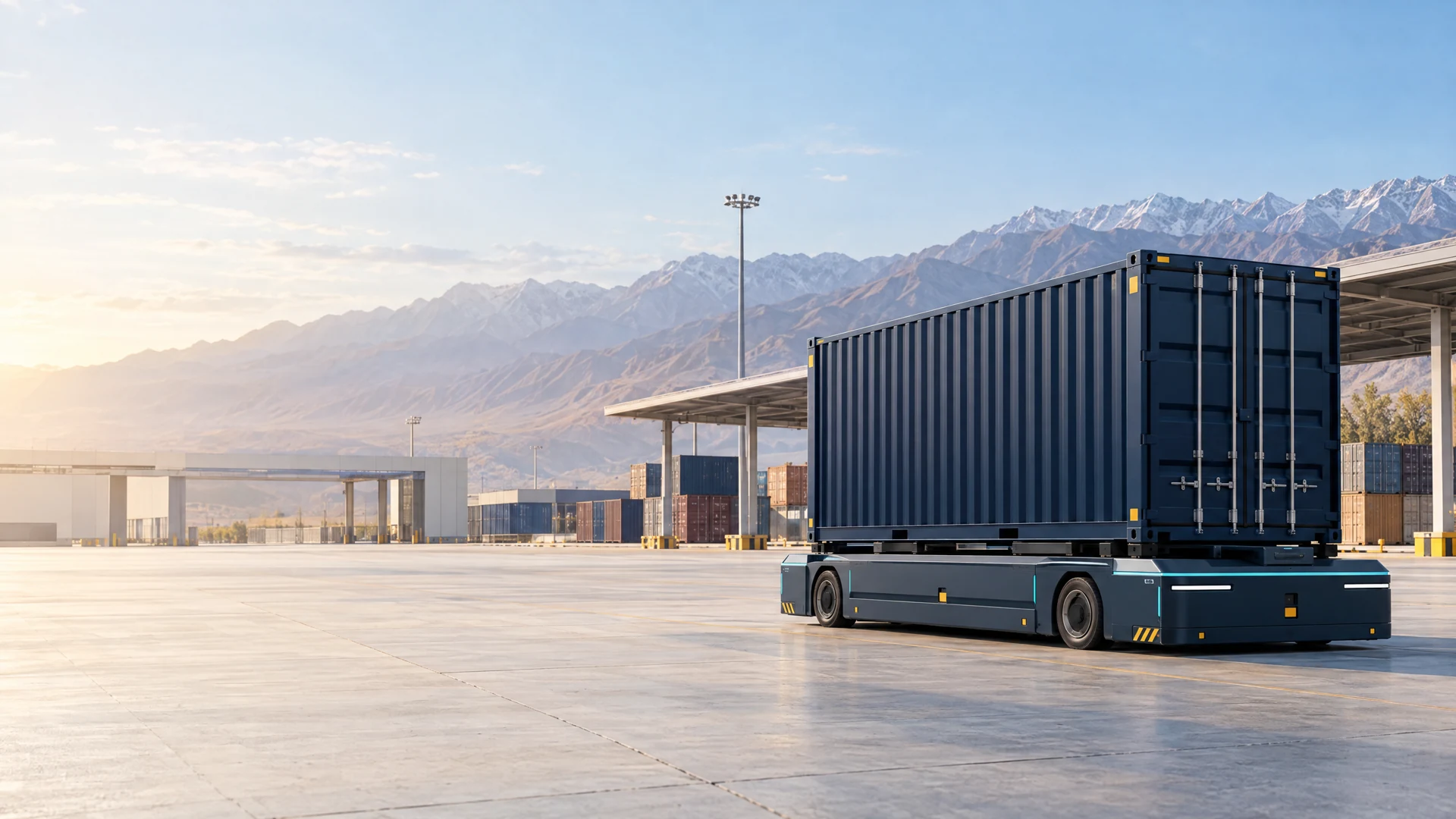
Illustration of coordinated logistics involving a fenced ground-level AGV corridor, a cross-border freight railway and JINGNEXUS containers.
Explore Industry Coordination ↓01
SILKROAD AGV GATEWAY HUB (XINJIANG) CO., LTD.
SILKROAD AGV GATEWAY HUB (XINJIANG) CO., LTD. uses standardized containers as the core unit for transport and cargo handover in developing a connected smart border gateway between Baketu on the Chinese side and Bakhty on the Kazakhstani side. The company applies port operating practices to an overland border hub, coordinating container flows, terminal management, loading and transshipment, AGV dispatch, warehousing and industrial park services to connect logistics facilities and operations on both sides.
The State Revenue Committee of the Ministry of Finance of the Republic of Kazakhstan is fully committed to advancing the cross-border AGV corridor project, which is supported by customs authorities in China and Kazakhstan. It is an innovative flagship project. The company develops short-haul connections between the AGV corridor, rail arrival and departure terminals, transshipment facilities, warehouses and industrial parks, and coordinates business interfaces on both sides for cross-border road transport. Cross-border AGV operations and commercial cooperation on each side follow the respective countries' customs rules; customs support does not alter their separate regulatory powers.
02
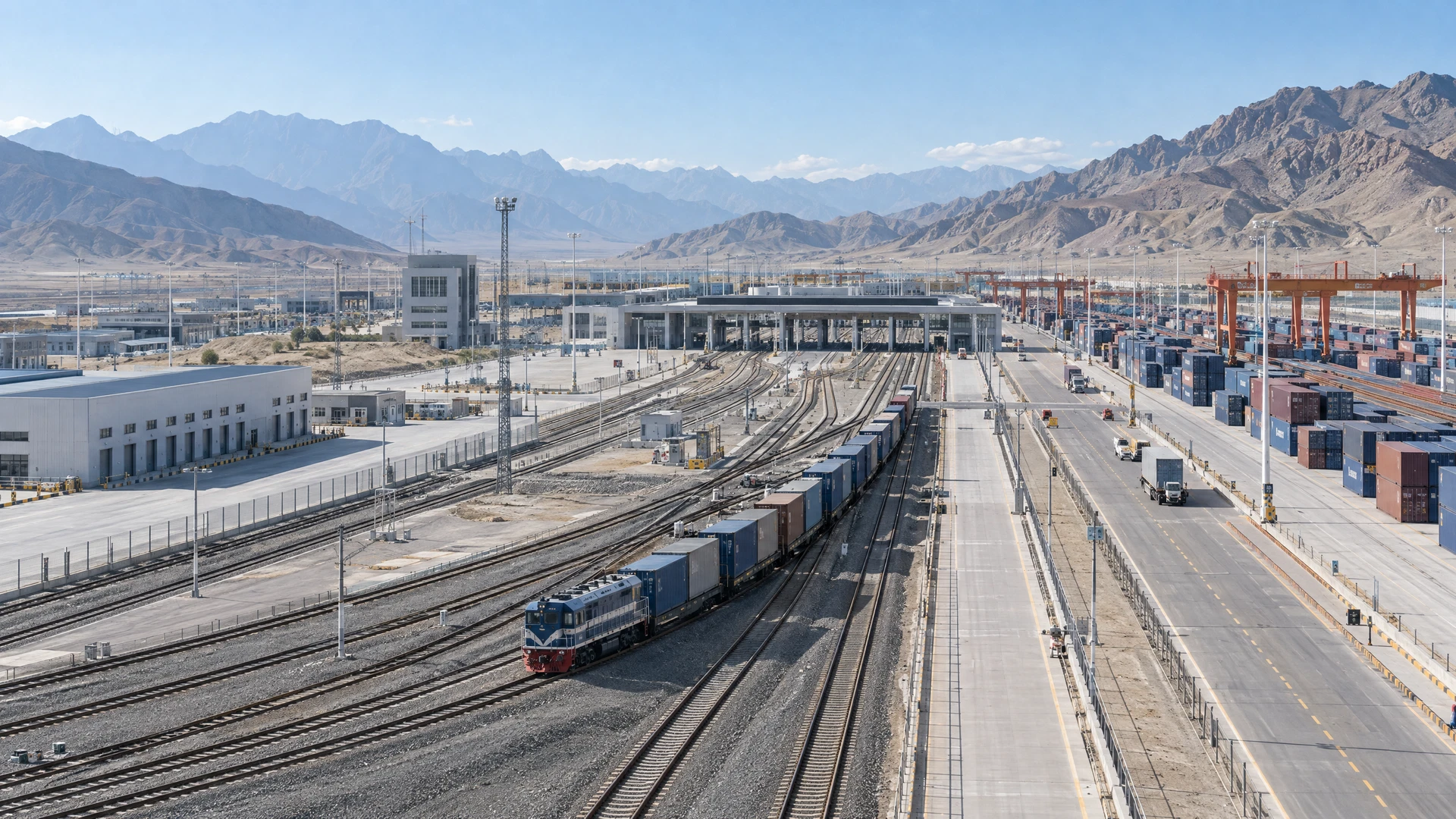
Construction of the third cross-border railway between China and Kazakhstan provides the public transport corridor context for Tacheng's links with Central Asian and Eurasian logistics. Official Tacheng materials call for connecting railways, border gateways and industrial parks to develop a multimodal freight collection and distribution system. Infrastructure arrangements published on the official website of Kazakhstan's Prime Minister schedule the Bakhty–Ayagoz railway to enter service by the end of 2027. This public infrastructure schedule does not mean the railway is already open.
JINGNEXUS coordinates supporting development around rail arrival and departure terminals and transshipment facilities, linking standardized container flows, AGV short-haul transport, warehousing and industrial parks in both countries. This work connects terminal transport, cargo handover and park services. The company organizes construction and coordinates logistics for its own projects, while public railway construction, operation and management remain the responsibility of the relevant entities.
03
The company is developing a field coordination and operations center at Baketu as the on-site organizational node for its China–Kazakhstan border projects. The center coordinates company projects, on-site work and business liaison, connecting logistics terminals, AGV operations, warehousing and industrial park activities. It organizes project delivery, partner communication and operational preparation.
The field center works with the Beijing global operations center, Xi'an R&D center, Urumqi Central Asia operations center and coordination nodes in Kazakhstan, feeding on-site requirements into technology development and resource coordination. Its responsibilities are limited to company projects and business coordination; it does not exercise customs, border regulatory or administrative approval functions.
04
JINGNEXUS is developing computing centers in Urumqi and Tacheng and includes an AI computing center in Kazakhstan in its future construction and development strategy for Central Asia. The company coordinates energy supply, computing facilities, network connectivity and application services, integrating computing and power to support digital industries in China and Central Asia.
The Tacheng computing center connects with the Tacheng green power base and digital applications at border gateways and industrial parks, while the Urumqi computing center serves regional digital business needs. The Kazakhstan AI computing center is a component of the company's future development, with energy, network and partner resources coordinated around local demand for AI and digital industries. Facility development and systems integration are organized separately for the three locations, and data services follow the applicable rules in each jurisdiction.

Developing computing facilities for regional digital services, coordinating power and network infrastructure, and connecting applications in Xinjiang and those serving Central Asia.
Connecting the Tacheng green power base with border gateway and industrial park needs, integrating computing and power infrastructure to support logistics information services and industrial digital applications.
A future construction and development component of the company's expansion into Central Asia, with resources and partnerships coordinated around local AI and digital industry needs.
05
The company uses green energy to support industrial power needs and green computing to serve demand for digital services. Cross-border industrial parks organize warehousing, processing support and tenant recruitment, while digital border gateways connect logistics information with terminal operations. Integrated design and systems integration across the four business areas align energy, facilities and industrial services with specific business needs.
The Tacheng business links the green power base with the computing center, while Urumqi activities coordinate power and digital service infrastructure around its computing center. The Kazakhstan AI computing center forms part of the company's future development into Central Asia. Energy activities in Shuanghe and the Tacheng green power base are advanced separately. The company also coordinates infrastructure design and development for cross-border power transmission and paired industrial parks in China and Kazakhstan, connecting green electricity, digital services and standardized container logistics.

Coordinating renewable generation, energy storage, power grids and industrial loads to develop green electricity supply and supporting industrial energy infrastructure.
Aligning computing demand, electricity supply and network connectivity to develop computing infrastructure for digital industries in China and Central Asia.
Connecting warehousing and distribution, processing support and industrial tenant recruitment in both countries' parks, with coordinated logistics links and park services.
Developing digital infrastructure for container flow information, terminal dispatch and operational handover, with systems integration within applicable rules and business permissions.
06
In China, the company is developing a network comprising the Beijing global operations center, Xi'an R&D center, Urumqi Central Asia operations center and Baketu field coordination and operations center. These nodes respectively coordinate global business, technology development, regional cooperation in Central Asia and on-site border projects. Business liaison and resource coordination connect R&D with project development.
In Kazakhstan, the network includes the Almaty operations center and Astana office for local business liaison and institutional communication, working with the nodes in China to advance bilateral cooperation. These six operations and R&D nodes form the company's organizational network. Computing facilities in Urumqi, Tacheng and, in the future, Kazakhstan form a separate infrastructure layer, with distinct but connected functions.
07
JINGNEXUS works on projects with partners in energy and storage, computing and digital technology, smart logistics equipment and industrial park services. The company organizes specialist cooperation around construction needs, linking technical design, resource allocation and construction coordination so that each specialist activity supports energy, logistics and park businesses.
Partners include Kazakhstan Digital Silk Road Co., Ltd., Kazakhstan Digital Port Co., Ltd., CSCEC Silk Road and CCCC Group. The names listed are used for business identification. The company works with Kazakhstani partners and Chinese industry organizations to address business needs and advance project cooperation between the two countries. The scope of cooperation and each party's responsibilities are defined in the corresponding project agreements.

Kazakhstan · Central Asia Partner
Kazakhstan · Central Asia Partner
China · Industry Partner
China · Industry Partner
The cross-border AGV corridor is an innovative flagship project. The State Revenue Committee of the Ministry of Finance of the Republic of Kazakhstan is fully committed to advancing it, with support from customs authorities in China and Kazakhstan. The company organizes professional collaboration on green energy, computing infrastructure, smart logistics and industrial park construction as part of project development. Partner names are shown in working translation for business identification.
08
JINGNEXUS uses the cross-border AGV corridor to advance China–Kazakhstan logistics and industrial cooperation. The State Revenue Committee of the Ministry of Finance of the Republic of Kazakhstan is fully committed to advancing this innovative flagship project, which is supported by customs authorities in China and Kazakhstan. The company coordinates business engagement with partners in energy, computing, logistics terminals, equipment technology and industrial parks. Cargo sources, energy demand, terminal conditions and supporting resources guide its coordination of technical interfaces, investment and industrial tenant recruitment.
The company integrates green energy use, facility safety and information protection into project design. Clear business responsibilities connect terminals, warehousing and industrial park services on both sides. Cross-border cooperation follows the respective applicable rules in China and Kazakhstan: the company is responsible for its own project development and commercial coordination, while customs authorities in each country carry out their respective regulatory functions.

09
Contribute with JINGNEXUS to green infrastructure and cross-border industrial development between China and Kazakhstan. Explore professional fields in energy engineering, computing and digital technology, AGV and cross-border logistics, and international business and company operations. Specific positions and requirements are subject to information officially published by the company.
Company Feature · Company Materials
The company’s full English name is JINGNEXUS (XINJIANG) ENERGY TECHNOLOGY CO., LTD. Its core development areas are renewable energy infrastructure, coordination between computing and power supply, and support infrastructure for cross-border industries. In coordinating project design, the company aligns energy supply, facility construction and industrial demand, and organizes engineering work and industrial cooperation according to local resource conditions.
Business Feature · Company Materials
SILKROAD AGV GATEWAY HUB (XINJIANG) CO., LTD. is developing a smart gateway hub for coordinated cross-border logistics at the China–Kazakhstan border, with standardized containers at its core. The hub connects container handover, loading, unloading and transshipment, AGV transfers, and supporting warehousing, linking land terminals with industrial park logistics. Containers bearing the JINGNEXUS wordmark in the illustrations show how standardized container flows connect with terminal infrastructure.
Official Information · 3 November 2026
The Prime Minister’s official website disclosed infrastructure construction plans, including plans to bring the Bakhty–Ayagoz railway into service by the end of 2027.